
Leaving and Arriving
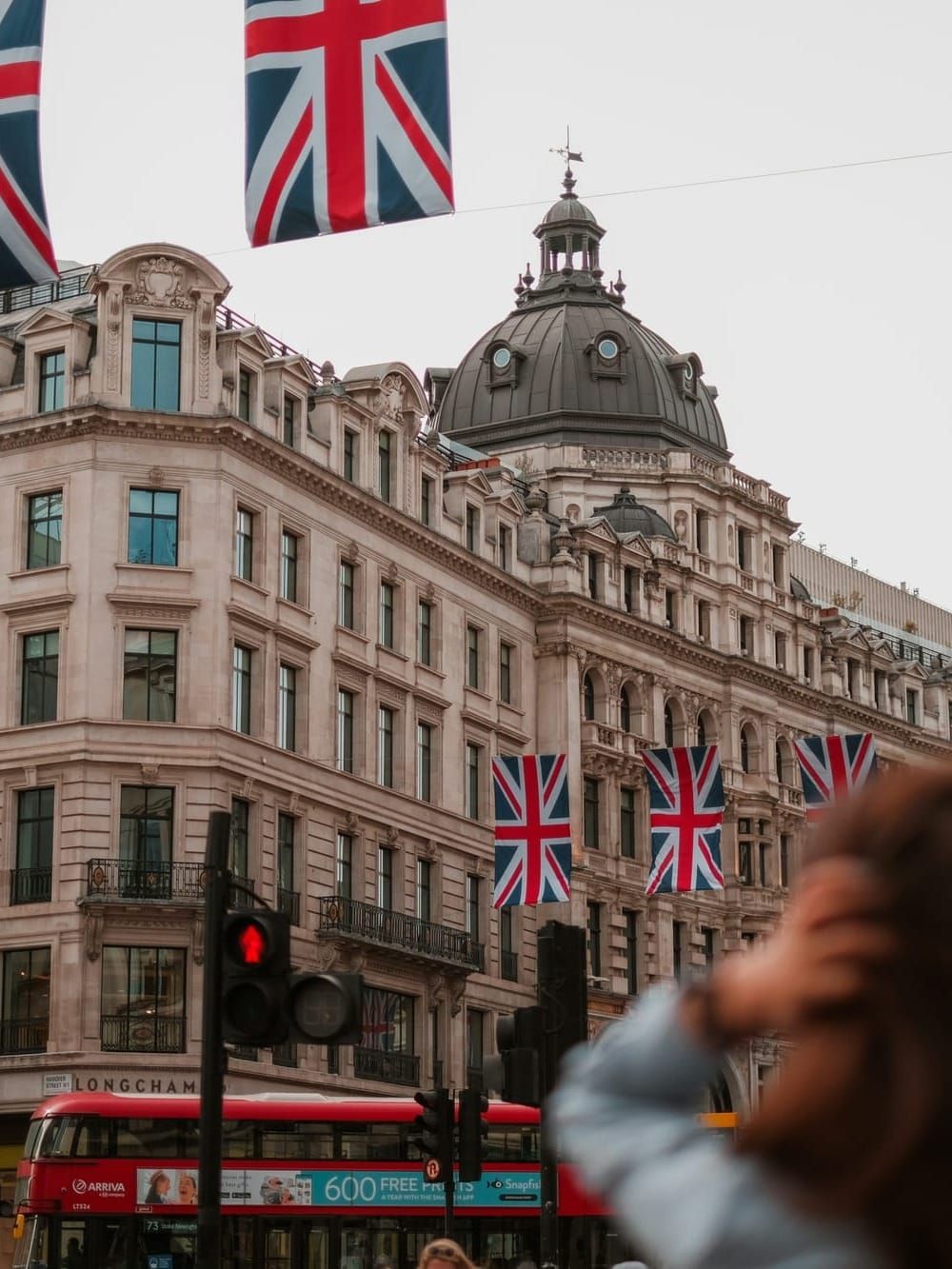
Leaving England
When you’re running away from something you don’t think about what you are leaving behind.
In 1982, when I left Cumbria, in the UK, I didn’t think about it. I was following the person I was in love with, Dog (nickname obviously), who’d bought me an aeroplane ticket to Australia. He’d written to me 2 months after he landed in Sydney, telling me to apply for a passport and a year’s working holiday visa. I could barely believe he was coming back for me so, when he did, I wasn’t thinking beyond going to Sydney for one year to spend that time with him. That was the adventure.
I was young, only 18, but I couldn’t wait to leave my past behind. My surname behind. I hadn’t been speaking to my mother for some time and in the weeks leading up to leaving, I’d moved into my friend Elaine’s house. An already full house of seven but they welcomed me without a second thought.
Into a small tartan suitcase I’d borrowed from my Aunty Margaret, I packed the few clothes I had. As hand luggage, I carried over my shoulder a woven straw basket (the kind that were fashionable in the early eighties), and in that basket I had a notepad, diary, a stick of Blackpool rock from my friend Elaine’s mam Christine, a book and a few bits and pieces other people had given me to travel with.
I packed my boyfriend’s teddy bear, given to him at birth. Bluey. Bluey sat on top of the basket, and the air hostess smiled at me as I clicked my seatbelt for the very first time. There were two spare seats next to me, so the basket got a seat of its own, with Bluey sitting there as my travel companion.
It was a big adventure. A scary one, as I was on my own and going through Bali – a stopover I hadn’t planned on. Dog had forgotten to check his re-entry visa. By the time he looked at it, he had very little time to get back into Australia before it expired. We went into Carlisle to a travel agent, the two of us sitting there with panicked expressions, and were told there was only one seat on a plane to Sydney by that date. He had to go alone, and I had to follow. The next available flight was on a different airline, Garuda, with a two-day stopover somewhere I’d never heard of. Bali, Indonesia.
My fear: what was I going to do on my own for two whole days on a tropical island?
The travel agent assured me the Australian owners of the Coconut Grove Hotel in Sanur would make me feel welcome. There’d be a driver at the airport. All would be well. And sure enough, that’s exactly what happened.
When I was leaving England and heading to the other side of the world, there were so many things on my mind I hardly gave a thought to what I was leaving behind. I just could not wait to get the hell out of there and start something new.
Dog had already started something new – his very own adventure. When I first met him, he used to talk about running a turtle farm in Venezuela. He had these amazing fantasies and ideas he’d just verbalise, and that’s what I loved about him. He was eccentric. He was well read, and I don’t mean The Sun newspaper. He was very smart and very funny and not like any other man in my life. That’s what I was going toward. I was excited, and nervous as hell about landing in a tropical paradise at eleven o’clock at night.
Not that I needed to worry. My biggest concern, as a pale northern English girl, was my lily-white skin getting sunburnt.
Arriving in Australia
Landing in Australia was surreal.
Dog picked me up from the airport. It was a Saturday morning, and that afternoon we walked from our boarding house on the edge of Redfern – a rather notorious postcode – across a park lined with enormous other-worldly Tolkienesque trees I was informed were Moreton Bay Figs. Then we cut through Central Station and on to the CES, the Commonwealth Employment Service, in Chinatown. It was closed but peering through the window of the CES, I could see endless rows of double-sided display boards covered in small cards with jobs on them. That was how it worked. You looked through the cards, picked the ones you fancied, went up to the counter and asked if you could go for an interview. This was to be my first port of call on Monday morning. We then walked back to Central Station, got on a train and looped the City Circle. This was reconnaissance – Dog was showing me all the stations in the city, in readiness for whatever job interview I was likely to land on the Monday morning.
We walked down George Street, one of the city’s main streets, but it was deserted because back then most of the shops closed at 12pm on a Saturday. We stood on the corner of George and King Street and Dog told me to check out all the weird and wonderful flavours in the Darrell Lea ice cream store.
I’d grown up with raspberry ripple, vanilla or chocolate ice cream. That was about it. I stood there agog, looking at black ice cream. Liquorice-flavoured ice cream. There were so many flavours I’d never heard of before and could never have imagined.
We got an ice cream each and walked down to the harbour. It was somewhere along George Street, while eating that ice cream, that a strange feeling hit me. Anonymity. I realised nobody in that city knew who I was.
It was a weight off my shoulders, to be honest. And it was exciting. The idea that I could create my own history. Write my own rules. Construct a new version of me.
I was only 18 years old, but 18 wasn’t what it is now. When I was young, everyone left school at 16. By the time I landed in Australia I’d been at art college for two years. I’d been working evenings and weekends at a steakhouse and bar in town, first as a cashier because I was too young to serve alcohol and then, when they were short staffed and the rule book was thrown out the window, I served at weddings on Saturdays, upstairs where no one could see me. The older waitresses showed me how to carry three plates full of food on one arm and how to dodge many pairs of wandering hands from the male guests – something that was not at all unusual back then. The one wedding that stayed with me was a gypsy wedding — the most crazy, flamboyant thing I’d ever seen, and the most missing teeth I’d ever encountered in one room.
So, by the time I arrived in Australia, I’d lived a life. I’d had a rough upbringing. I’d seen things children should never see. I had to grow up quickly. Not that I saw myself as all grown up at the time — but when I look back now and think about what my daughter Tess was like at 18, I know it was a different world. The one I grew up in: parts of it I would never change, and parts of it I would do anything to erase.
But there was so much good the village gave me. Not least, that Cummersdale was in the catchment for Caldew School, a co-ed high school full of country kids who all grew up in small villages with a strong sense of community. Five days a week I got hot delicious free school meals because my mam was a single parent. The only part that shamed me was Monday mornings, when the teacher did the roll call and then asked each kid to come up and pay their lunch money for the week. There were only two of us in my form who didn’t have to get up. Who stayed seated. That was its own kind of marking out.
Regardless of the discomfort I felt with my family situation, my incredible high school friends never once made me feel any different to them. Caldew School was five years of pure fun and a very welcome distraction from my home life.
Little did I know then that within two years of leaving Caldew School, I’d be landing in Australia. Bob Hawke’s Australia. 1980’s Australia. It was a bloody hoot. Sydney at that moment in history was phenomenal.
I started waitressing and, before I knew it, I was working in the rag trade. I was a shop assistant in a Benetton store in Double Bay then in no time at all I was the manager and then area manager, being flown to the Gold Coast and Brisbane. I would have been 22, 23 at most.
Double Bay was an exclusive suburb. Parked in Knox Street every day were Aston Martins and Bentleys plus a Rolls-Royce permanently parked in front of a jewellery store opposite Benetton. I knew far more about Ford, Massey Ferguson and John Deere tractors than I did about prestige cars and, to be honest, I found them quite offensive!
What I didn’t find offensive was the sleazier side of Sydney. Every weekend I was out in Surry Hills – frequenting pubs with very un-English names, the Dolphin, the Clock. We went out with all the expats from the boarding house which was right on the edge of Redfern – a notoriously dangerous place to live in the early 80’s. Our friends were Kiwis, Scottish, English and Irish. Surry Hills before it was gentrified, when the terrace houses didn’t cost a fortune and some were derelict and there were homeless people everywhere. And after Surry Hills, we’d end up in Kings Cross.
Me, from a tiny village in the north of England, walking along Darlinghurst Road on a Saturday night. The sex workers, the cross-dressers, neon lights everywhere you looked and that enormous iconic flashing Coca-Cola sign. It was a spectacle and it was bloody fantastic.
What can I say? Australia really did live up to its reputation as the lucky country in the 1980’s, and some of the most colourful, wild and lawless parts of Sydney were within walking distance of my new home!
New essays arrive by email. No frequency promises, only when there's something worth saying.
Member discussion